Planets:
huge and hot
Ultra-Hot Transiting Planets
Directly-Imaged Exoplanets
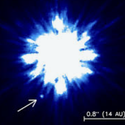
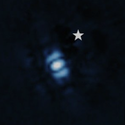
Featured: directly imaged planets formed early
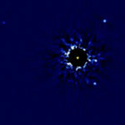
How and when do giant planets far from their stars form? The atmospheres of directly imaged planets are often enriched in metals compared with their host stars, a sign that they accreted solid material as they formed. In Wang (2025, ApJ 981, 138), I analyzed seven directly imaged planets with measured stellar and planetary chemical abundances: 51 Eri b, β Pic b, HIP 65426 b, HR 8799 c and e, AF Lep b, and YSES 1 c.
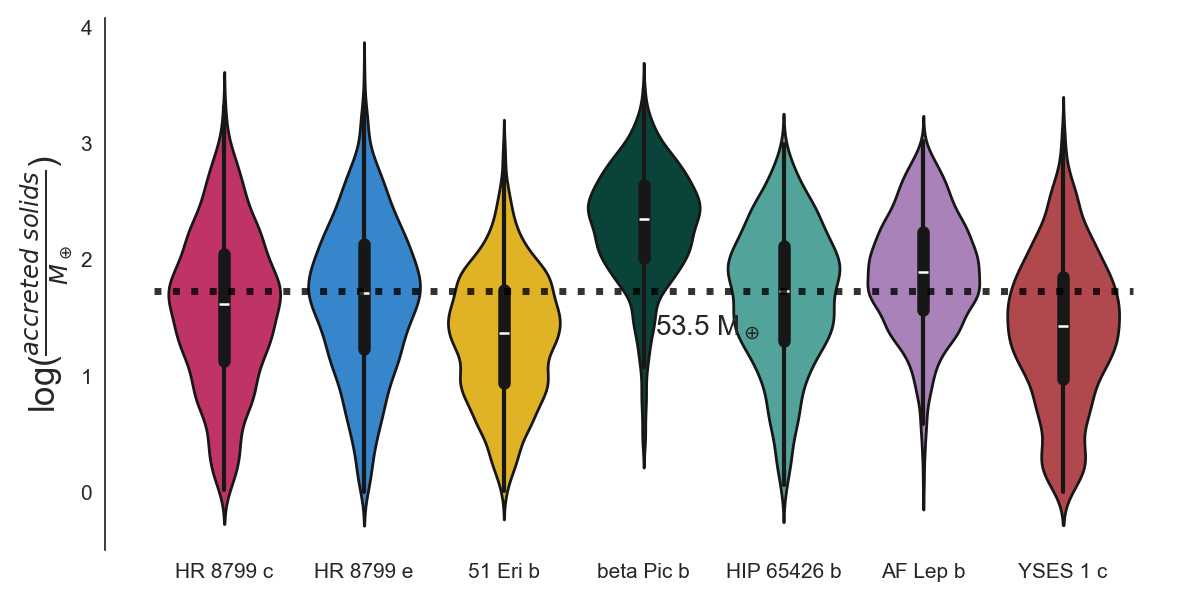
These planets accreted large amounts of solids, on average about 50 Earth masses each and between 23 and 223 Earth masses for individual planets, whether they formed by core accretion or by disk instability. Such large amounts of solids were only available early on, in young and massive protoplanetary disks, which implies that these planets formed early, within about 2 million years. The work was featured by OSU News.